September 2026 Electricity Bill Increase Explained: QTA Expiration
TL;DR: Your September 2026 electricity bill will be higher than your August bill because a temporary NEPRA relief of Rs 1.9857 per unit has expired. This negative Quarterly Tariff Adjustment (QTA) was legally restricted to the billing cycles of June, July, and August 2026. Once September begins, the base per-unit cost returns to normal, instantly increasing your bill even if your usage stays exactly the same.
If you are wondering why your bill jumped this month without a single extra appliance running, you are looking at the expiration of a short-term regulatory subsidy, not a new tax.
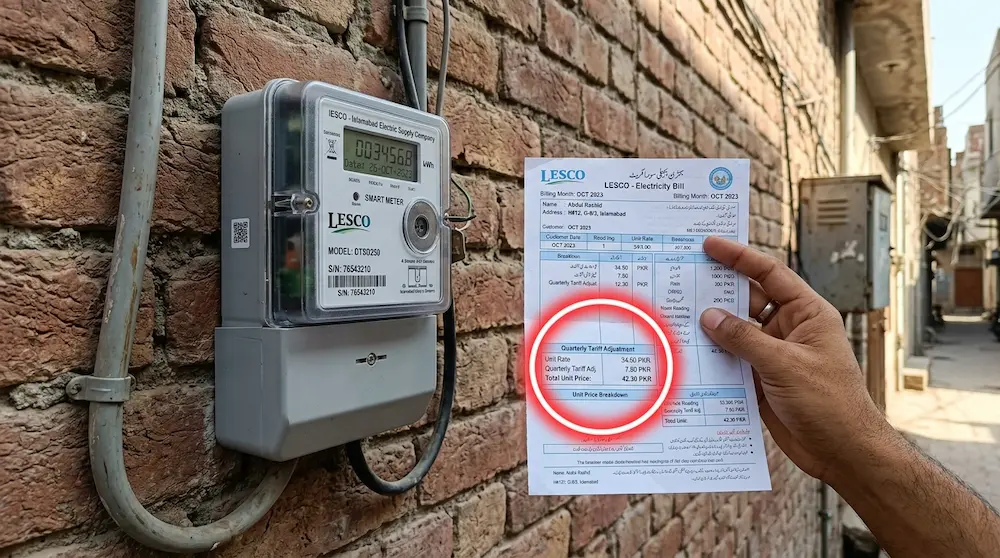
Here is the exact breakdown of how this regulatory shift impacts your upcoming billing cycle.
The Rs 1.9857 QTA Expiration Explained
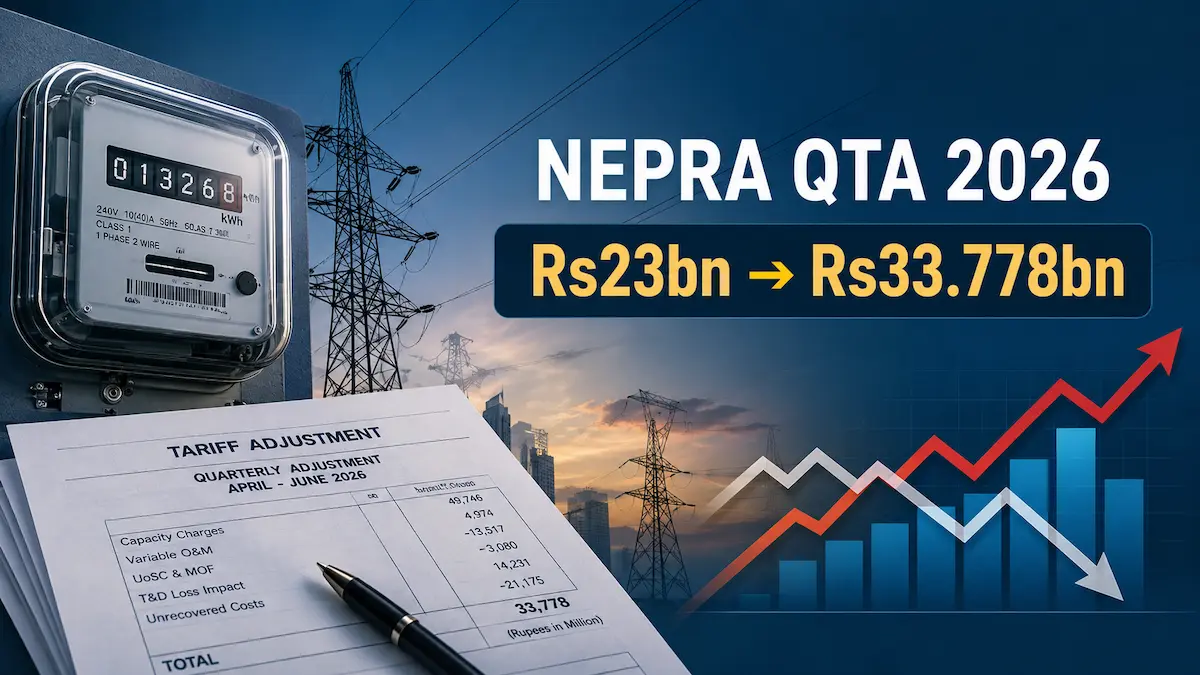
In early June 2026, the National Electric Power Regulatory Authority (NEPRA) finalized its evaluation of the Power Purchase Price (PPP) for the first quarter of the calendar year. Based on data certified by the Central Power Purchasing Agency-Guarantee (CPPA-G), NEPRA approved an overall negative adjustment of Rs 67.173 billion.
Instead of holding this money, the Federal Government directed that it be passed down to consumers as a uniform national tariff reduction.
This resulted in a direct discount of Rs 1.9857 per kilowatt-hour (kWh) applied across all 11 state-owned XWDISCOs (including MEPCO, LESCO, and FESCO) and K-Electric.
The caveat was the timeline. The official notification mandated that this relief only apply to a three-month window: June, July, and August 2026. As of September 1, 2026, that Rs 1.9857 per unit discount disappears from the consumer-end tariff.
The Exact Rupee Impact on Your September Bill
When a negative QTA expires, your base tariff increases. Because applicable taxes like the 18% General Sales Tax (GST) are calculated on the total energy cost, the actual out-of-pocket increase will be slightly higher than the base calculation.
Here is the direct financial hit based purely on the loss of the Rs 1.9857 per unit relief.
| Monthly Consumption | Relief Lost (Base Bill Increase) | Real-World Impact |
| 100 Units | Rs 198.57 | Your September bill jumps by roughly Rs 200 over August. |
| 200 Units | Rs 397.14 | Expect a sudden Rs 400 increase, assuming identical usage. |
| 300 Units | Rs 595.71 | Your bill rises by nearly Rs 600 without turning on an extra fan. |
| 500 Units | Rs 992.85 | A direct jump of nearly Rs 1,000 purely from the QTA expiration. |
Who Is Exempt from This Increase?
Not every consumer will see this specific spike, because not every consumer received the relief in the first place. NEPRA’s ruling explicitly excluded three categories of users from the summer discount.
If you fall into any of these groups, your per-unit cost remains unchanged going into September:
- Lifeline Consumers: Households using up to 50 units per month are protected by a separate, permanent subsidy structure and were excluded from this QTA variance.
- Incremental Consumption Package Users: Consumers billed under specialized seasonal usage packages did not qualify for this specific Rs 1.9857 drop.
- Prepaid Meter Consumers: Those utilizing prepaid electricity meters are billed on a distinct tariff schedule unaffected by this quarterly adjustment.
How to Project Your Next Payment
Because this adjustment is uniform across the country, a consumer in Quetta (QESCO) faces the exact same per-unit increase as a consumer in Lahore (LESCO) or Multan (MEPCO).
To see exactly what your upcoming payment will look like without the summer relief, check your August meter reading, match the units, and run your exact previous month’s units through our bill calculator
before the September reading date hits.